Collaborative reverse-engineering

Make sense of any binary.

Reversense automates the reverse-engineering of mobile and embedded apps — modeling the whole application, its system dependencies, UI and files into one universal representation you can explore, instrument, and test.
// how reversense works

Four phases into one representation.

Reversense runs as a virtual test bench. Each phase feeds a single universal representation — the model every tool on the platform reads from and writes to.

// the platform

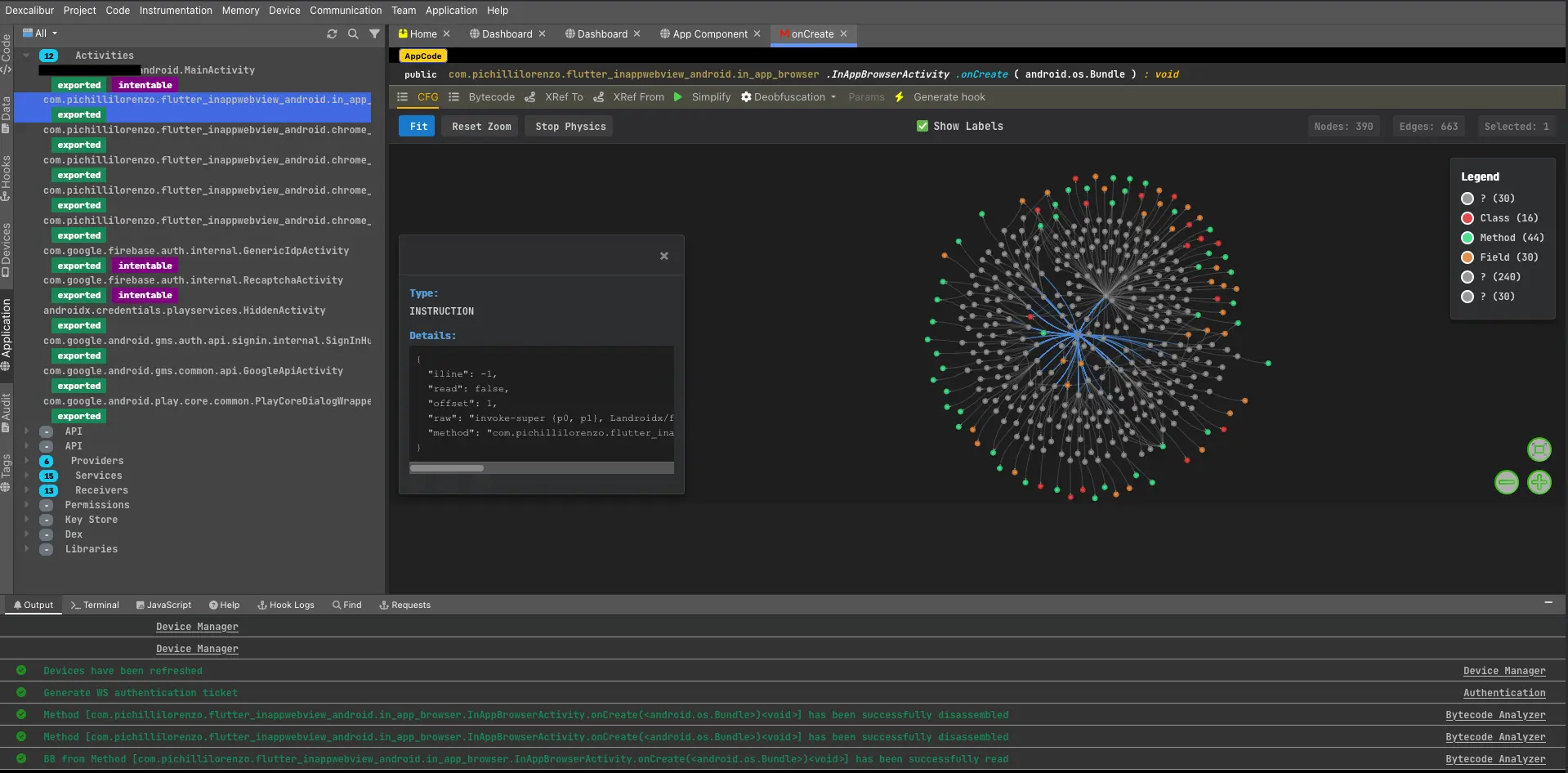
Static and dynamic, in one model.

Reversense pairs static analysis with dynamic instrumentation — what it calls stereoscopic analysis — and keeps every result explorable side by side.

// interoperability

Built for automation and AI.

Every capability shown above is callable over a standardized, OpenAPI-documented interface — and over our MCP server, so an LLM can drive the platform with the same access control as the API.

# reversense.mcp — tool call
tool: "search_representation"
query: "crypto init on startup"
scope: ["traces","libraries"]
# → 12 nodes, 3 hooks generated
 bash — install a plugin
$ node ./dist/dexcalibur.js --gui=home,pro --master-node --self-registration
// quickstart

Three steps to first analysis

  1. 01

    Open a target

    Drop a package and lets Reversense build the model.

  2. 02

    Launch a first run

    Select your favorite device and run.

  3. 03

    Explore models

    Reversense improves the model at runtime. Play with inspectors and options to explore components.